







Madagascar Declares National Disaster After Cyclone Gezani Devastation
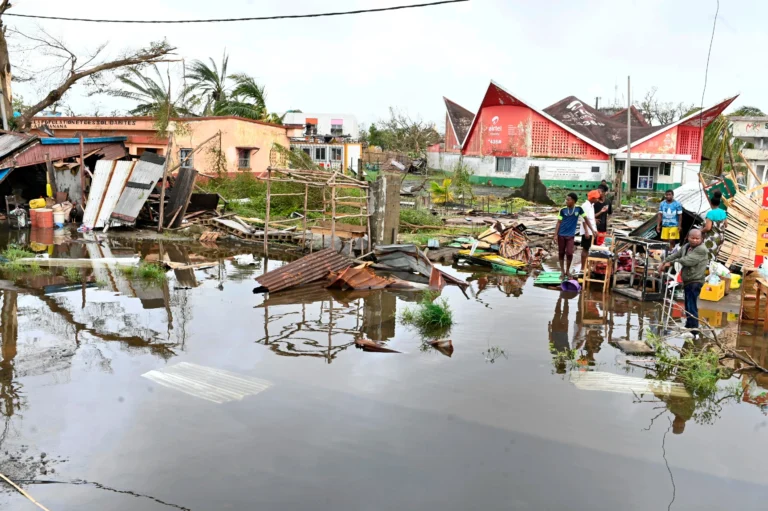
An overview shows the damage after Cyclone Gezani swept through the port city of Toamasina. Photo: AP.
February 12, 2026 Hour: 4:21 pm
🔗 Comparte este artículo
Madagascar declared a national disaster on February 12, following Cyclone Gezani’s devastation, which left at least 31 people dead and thousands of homes destroyed.
The Government of Madagascar declared a national disaster after Cyclone Gezani caused widespread devastation, leaving dozens of victims, massive housing destruction, and severe damage to key infrastructure across the Indian Ocean island nation.
This decision, made during a Council of Ministers meeting on February 12, addresses the severe humanitarian, economic, and social impacts of the storm, which hit the eastern Atsinanana region particularly hard, including the port city of Toamasina.
RELATED: Trump’s Carbon Agenda Fractures Fight Against Climate Change
According to the National Disaster Risk Management Office, at least 31 people died from the phenomenon, affecting over 250,000 individuals, with approximately 7,000 displaced from their homes.
Authorities reported that around 17,600 dwellings were completely destroyed, another 36,800 damaged, and nearly 10,900 flooded. In some Toamasina areas, reports indicate up to 90% of structures suffered damage.
The cyclone made landfall last Tuesday night in the coastal district of Toamasina II, with sustained winds up to 185 kilometers per hour and gusts reaching 250 kilometers per hour. Although the system weakened inland, it triggered severe flooding, infrastructure destruction, and significant economic losses.
The governmental decree cited the loss of human lives and widespread community disruption, exacerbated by Cyclone Fytia’s impact in late January and previous torrential rains.
President Michael Randrianirina called for both national and international support to confront the disaster’s aftermath. The Government pledged to execute emergency response and relief operations, prioritizing humanitarian assistance, shelter, food, and the reestablishment of essential services.
The national disaster declaration took immediate effect upon official publication via radio and television, as per current regulations.
Madagascar, one of the Indian Ocean’s most vulnerable countries to extreme climate events, thus faces a new humanitarian crisis amid the cyclone season, while still recovering from damage caused by previous storms.
Author: Laura V. Mor
Source: Agencies